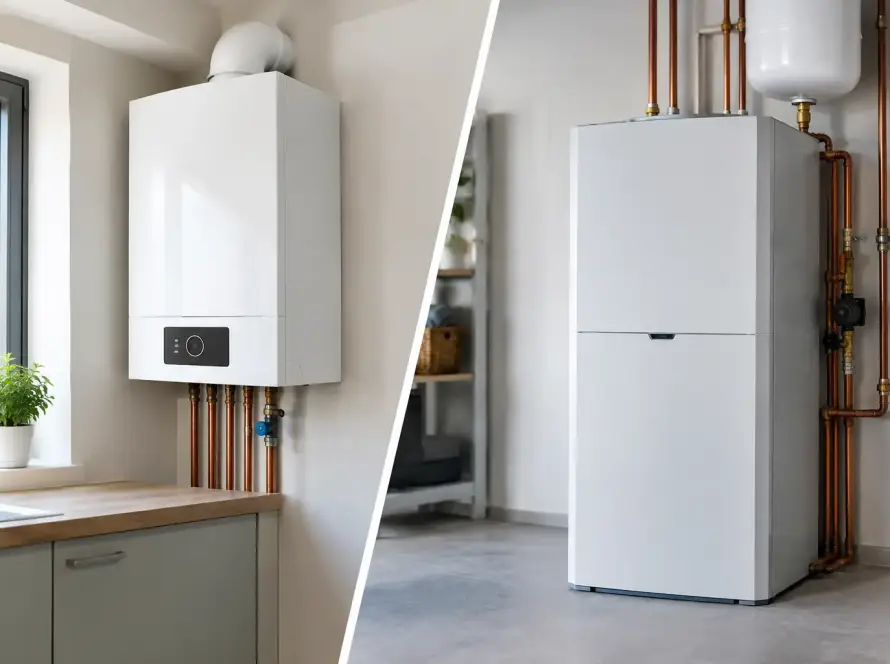


A boiler that suddenly stops working can leave your home cold, your shower running lukewarm and your day immediately more stressful. If you are looking for how to reset a boiler, the good news is that a simple reset can sometimes clear a temporary fault. The key is knowing when it is safe to try, and when a recurring lockout needs a qualified Gas Safe engineer.
A reset is not a repair. It tells the boiler to restart after it has shut itself down to protect you and the system. If it fires up and continues to work normally, the issue may have been temporary. If it locks out again, displays an error code or shows signs of a gas or water leak, do not keep resetting it.
When should you reset a boiler?
Most modern boilers have a reset button, often marked with the word “reset”, a flame symbol or a circular arrow. Older models may require you to turn a selector dial to a reset position and then back again.
You can usually try a reset when the boiler display shows a fault or lockout code, the heating and hot water have stopped, and there are no signs of danger. Before touching the controls, check that you do not smell gas, see water leaking from the boiler or pipework, or notice scorch marks, smoke or unusual banging noises. These are not reset-and-see situations.
If you can smell gas, turn off the gas supply only if it is safe to do so, open doors and windows, avoid electrical switches and naked flames, and seek urgent professional help. Never remove the boiler casing or attempt to repair internal parts yourself.
How to reset a boiler safely
The exact method differs by make and model, so your boiler manual should always take priority. However, the following approach is suitable for many domestic boilers.
1. Check the boiler display
Look for an error code or warning light before you reset anything. Write the code down or take a photo of it. This gives an engineer useful information if the fault returns, and it can help distinguish a simple ignition lockout from a pressure, fan, condensate or circulation issue.
Also check whether the boiler has electrical power. The display should be lit and the fused spur near the boiler should be switched on. If the display is blank, a reset is unlikely to help until the electrical supply has been checked.
2. Check the system pressure
For a sealed central-heating system, the pressure gauge will normally read around 1 to 1.5 bar when the system is cold. Some boilers show the pressure digitally instead.
If the pressure is below about 1 bar, the boiler may refuse to operate. You may be able to repressurise the system using the filling loop, but only if you know how your particular system works and there is no visible leak. Add water slowly and stop at the manufacturer’s recommended pressure, usually around 1 to 1.5 bar when cold.
Do not keep topping up a system that repeatedly loses pressure. That can point to a leak, a faulty pressure relief valve or an issue with the expansion vessel. Those faults need diagnosing properly rather than masking.
3. Press and hold the reset control
Many boilers need the reset button held for three to five seconds. Others reset with a quick press or by turning the control dial briefly to the reset setting. The boiler may make a few operating noises while it checks itself and attempts to ignite.
Give it a few minutes. If the display returns to normal and the boiler begins heating water or radiators, check it over the next day or two. A one-off lockout can happen, but it should not become a regular routine.
4. Check the thermostat and heating controls
If the boiler appears normal but your radiators are still cold, check the room thermostat, timer and any smart controls. Make sure the heating is programmed to be on, the target temperature is above the room temperature, and the batteries in a wireless thermostat have not gone flat.
For homeowners using Hive, Nest or another smart control, a lost connection or incorrect schedule can look very much like a boiler breakdown. Check the app and receiver before assuming the boiler itself is at fault.
5. Reset once, then stop if the fault returns
A single reset is sensible. Repeated resets are not. If the boiler locks out again shortly afterwards, it is telling you something is wrong.
A fault may be caused by low pressure, a frozen condensate pipe, ignition problems, a blocked condensate route, poor system circulation or a component failure. Some causes are straightforward, while others require diagnostic equipment and Gas Safe expertise. Repeatedly forcing the boiler to restart can delay the right repair and leave you without dependable heating when you need it most.
Common reasons a boiler needs resetting
Boilers are designed to lock out when they cannot operate safely or efficiently. During colder weather in Bolton and Greater Manchester, a frozen external condensate pipe is a common cause. This pipe carries acidic condensate away from the boiler. If it freezes, the boiler may shut down and show a fault code.
Where the pipe is safely accessible and you can clearly identify it, gentle warming with warm water can sometimes thaw it. Never use boiling water, a naked flame or aggressive force, as plastic pipework can split. If you are unsure which pipe you are looking at, call an engineer rather than guessing.
Low system pressure is another frequent issue, particularly after radiators have been bled or where there is a small leak somewhere on the heating system. A boiler can also lock out because of an ignition failure, a dirty sensor, a blocked filter, a faulty fan or pump, or poor circulation caused by sludge in the system. These are not faults that a reset can fix permanently.
When not to reset your boiler
There are occasions when the safest decision is to leave the boiler switched off and arrange help. Do not attempt a reset if you smell gas, suspect carbon monoxide, see persistent leaking, hear loud banging or notice soot marks around the appliance.
You should also avoid resetting a boiler that keeps tripping the electrics, has a damaged flue, or has been condemned or labelled unsafe by an engineer. Carbon monoxide has no smell or colour, so a working audible carbon monoxide alarm near the boiler area and sleeping areas is a sensible part of home safety.
If your boiler has stopped during very cold weather, protect your property too. Keep internal doors open where possible, use safe temporary heating and avoid leaving the home unheated for long periods where pipes could freeze.
What to tell an engineer if the reset does not work
A clear description can speed up a boiler repair visit. Let the engineer know the make and model of boiler, the exact error code, whether you have heating, hot water or neither, and whether the pressure is low or high. Mention any leaks, noises, recent power cuts, radiator bleeding or changes to your heating controls.
It also helps to explain what happened before the fault started. For example, did the boiler stop after a cold night, after topping up the pressure, or when the heating first came on in the morning? These details help narrow down the likely cause before work begins.
At GASCON Ltd, our local Gas Safe engineers provide fast, expert help for boiler breakdowns across Bolton and surrounding areas. We will explain the fault in straightforward language, advise on the repair options and treat your home with the care it deserves.
Can you reset a boiler too many times?
Yes. While one reset is a reasonable first step, repeatedly resetting a boiler can hide an underlying fault and may put extra strain on components. If it locks out twice, especially within a short period, arrange a professional check rather than continuing to restart it.
Will resetting a boiler remove its settings?
Usually, no. A standard reset generally clears the active fault or lockout and restarts the boiler. It should not erase your timer programme or smart thermostat settings, although a power cut can affect some older controls.
Does a boiler need servicing after a lockout?
Not always, but it depends on the cause and the age of the appliance. If the reset works once and there are no further problems, keep an eye on it and make sure the annual service is up to date. If the lockout returns, a repair visit is the safer option.
A boiler reset can restore heating quickly, but reliable warmth comes from finding out why it stopped in the first place. If your boiler will not restart or does not stay running, getting the fault checked early can prevent a small issue becoming a cold-house emergency.