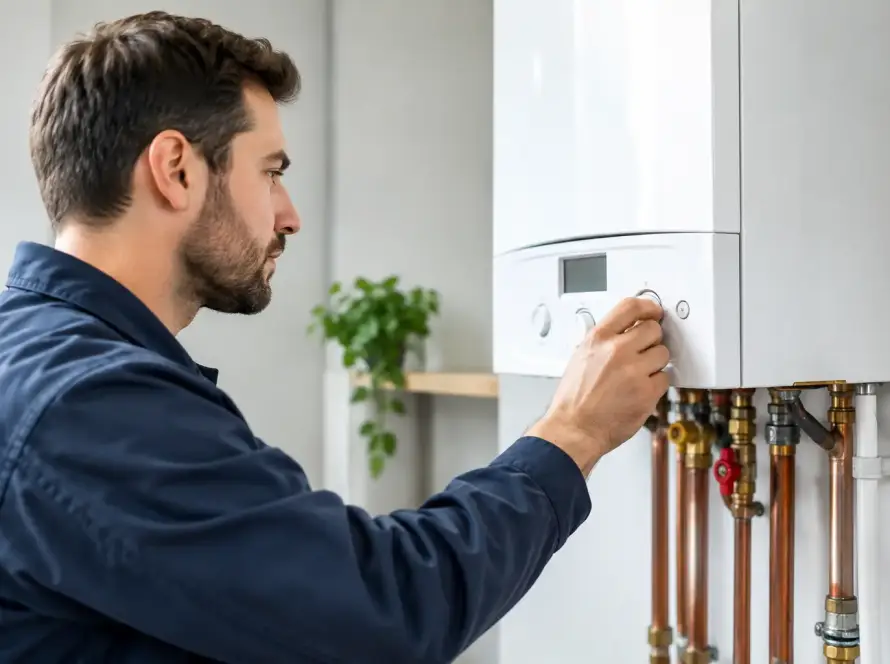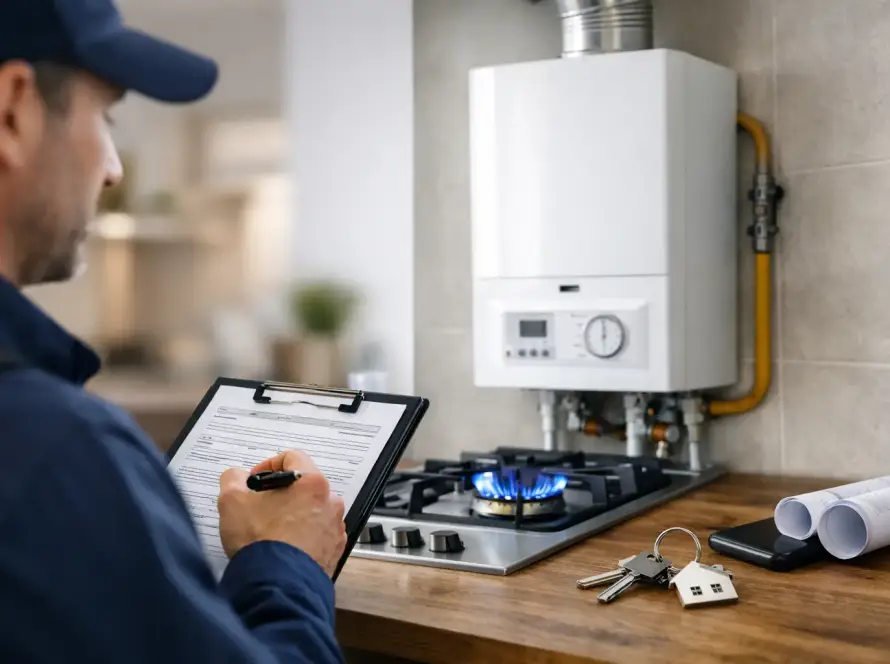


A boiler can look as though it is working normally while producing a dangerous fault in the background. So, can boilers leak carbon monoxide? Yes. A faulty gas boiler, flue or ventilation arrangement can allow carbon monoxide (CO) to enter your home. It is colourless, odourless and has no taste, which is why prompt action and regular professional checks matter.
For homeowners and landlords in Bolton, the message is straightforward: never try to diagnose a suspected carbon monoxide problem yourself. Get fresh air, switch off the appliance only if it is safe to do so, and call a Gas Safe registered engineer for expert help.
Can boilers leak carbon monoxide into your home?
A correctly installed, properly maintained modern boiler should burn gas safely and remove combustion gases outside through its flue. Carbon monoxide becomes a risk when that process is interrupted. The issue is not usually a visible leak from the boiler itself, like water dripping from a pipe. Instead, it can be caused by incomplete combustion or by fumes not escaping the property as they should.
A blocked, damaged or poorly fitted flue is one possible cause. So is a boiler that has not been serviced, has worn internal components or has developed a combustion fault. In some homes, unsuitable boxing around a flue, blocked air vents or alterations made after installation can also affect safe operation.
Older boilers are not automatically unsafe, and newer boilers are not immune from faults. What matters is their condition, installation quality and servicing history. This is why annual servicing is a safety check as well as a way to protect efficiency and reduce the likelihood of inconvenient breakdowns.
Carbon monoxide warning signs to take seriously
Carbon monoxide cannot be identified by smell, so do not wait for a gas-like odour before acting. A natural gas smell can indicate a gas leak, which is also urgent, but CO needs its own alarm and professional inspection.
Symptoms can be easy to mistake for a cold, flu or tiredness, particularly during winter when windows are closed and heating is on more often. Look out for headaches, dizziness, nausea, breathlessness, confusion, weakness or unusual tiredness. Symptoms that improve when you leave the house and return when you come back are a serious warning sign.
There can also be clues around an appliance. Yellow or orange flames on a gas appliance, rather than a crisp blue flame, may indicate incomplete combustion. Soot or dark staining around a boiler, fire or appliance, excessive condensation on windows, and pilot lights that frequently blow out can also point to a problem. These signs do not prove there is carbon monoxide, but they do mean the appliance should be checked without delay.
A carbon monoxide alarm provides another essential layer of protection. It is not a substitute for a boiler service, but it can alert you if CO reaches a dangerous level. Fit audible alarms in suitable locations in line with the manufacturer’s instructions, test them regularly and replace them by their stated expiry date. Do not place one directly beside the boiler or in a spot where steam, cooking fumes or poor positioning could affect its performance.
What to do if your CO alarm sounds
Treat an activated carbon monoxide alarm as an emergency. Do not assume it is a low battery warning unless the alarm clearly indicates that. The right response protects the people in the property first, then deals with the appliance.
Open doors and windows where possible, turn off gas appliances if you can do so safely, and leave the property. Do not use matches, lighters or electrical switches to investigate. If anyone feels unwell, seek urgent medical advice and tell the clinician you suspect carbon monoxide exposure.
Once everyone is safe, contact the National Gas Emergency Service on 0800 111 999 if you suspect a gas emergency. You should also arrange for a Gas Safe registered engineer to inspect the boiler and associated flue before using the appliance again. Never reset the alarm and carry on heating the house in the hope that the sound was a false alert.
For landlords, the responsibility is especially clear. Gas appliances and flues in rented homes require an annual gas safety check by a Gas Safe registered engineer, with the appropriate record provided to tenants. Even where the legal duties differ for homeowners, the practical safety standard should be the same.
Why boiler flues and ventilation matter
Your boiler’s flue is the route that carries combustion gases safely outdoors. It may run through an external wall, roof space, cupboard or boxed-in section of the property. If the flue is concealed, it still needs to be accessible for visual inspection where required. Covering it with fixed cupboards, panels or building work can make it harder to spot deterioration, loose joints or staining.
Ventilation is equally important for certain appliances. Air vents are sometimes blocked because they let in a draught or seem unnecessary after decorating. However, they may have been installed to provide combustion air or safe ventilation. Do not cover, remove or alter vents without taking advice from a qualified engineer.
This is also worth remembering during renovations. A new kitchen, loft conversion, extension or boxing-in project can affect pipework, flues and ventilation routes. Before work starts near a boiler or flue, make sure the plans account for safe clearances and future servicing access. It is much easier and less costly to address this at the design stage than after a room has been finished.
How an annual boiler service helps prevent CO risks
A proper boiler service is more than a quick look at the front of the appliance. A Gas Safe engineer checks the boiler’s safe operation, examines the flue and its termination where accessible, assesses combustion, looks for signs of corrosion or leaks, and confirms safety devices are working as intended. They can also identify issues that may later lead to loss of heating or hot water.
The exact checks depend on the boiler model, its location and the installation. Some faults are obvious, while others need specialist testing equipment to identify. That is why DIY boiler repairs are never appropriate. Removing a case, adjusting gas settings or attempting to repair a flue can create a more dangerous situation and may invalidate warranties or insurance cover.
Servicing does not guarantee that a fault will never develop between appointments. A component can fail unexpectedly, and accidental damage can happen at any time. But it is one of the most effective ways to catch developing problems early, maintain manufacturer requirements and keep the appliance running efficiently.
If your boiler has been making unfamiliar noises, repeatedly losing pressure, cutting out, producing error codes or costing more to run, book an inspection rather than waiting for the annual service date. These issues are not all related to carbon monoxide, but they are reasons to have a qualified engineer assess the system.
Choosing the right engineer for a safety concern
For any gas boiler work, use an engineer who is Gas Safe registered and qualified for the type of appliance in your home. You can ask to see their Gas Safe ID card and check that the work categories on the back cover the job required. A reputable engineer should explain what they have found in plain English, outline the available repair options and make clear if an appliance must remain off for safety.
At GASCON Ltd, our local Gas Safe engineers provide boiler servicing, repairs and emergency support for homeowners and landlords across Bolton and the surrounding area. With more than 20 years of practical experience, we focus on clear advice, careful testing and clean, professional work – particularly when your family’s safety is involved.
If you are worried about a boiler, flue or carbon monoxide alarm, act on that concern now. Fresh air, a safe exit from the property and a qualified inspection are far better than taking a chance with an appliance that does not feel right.