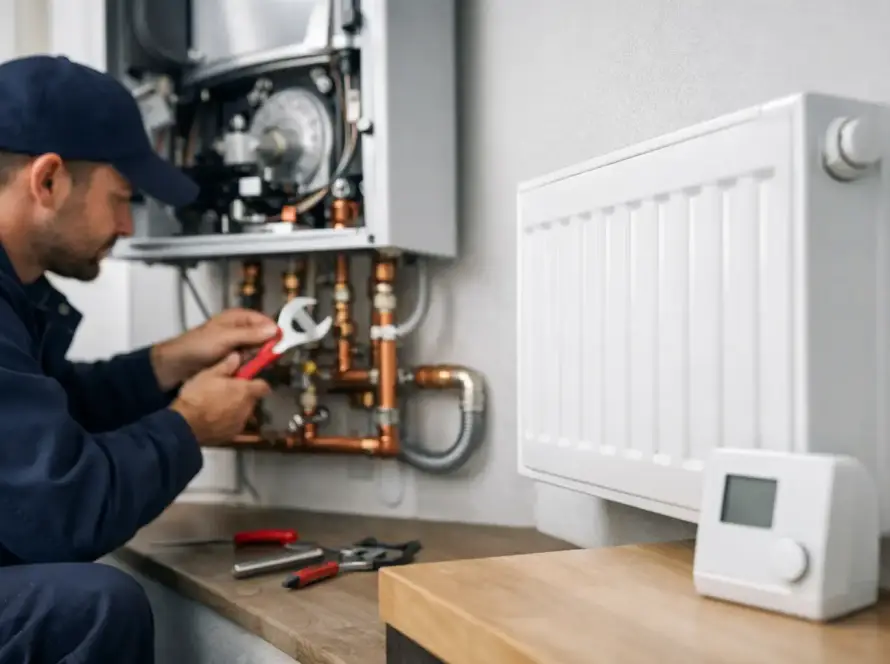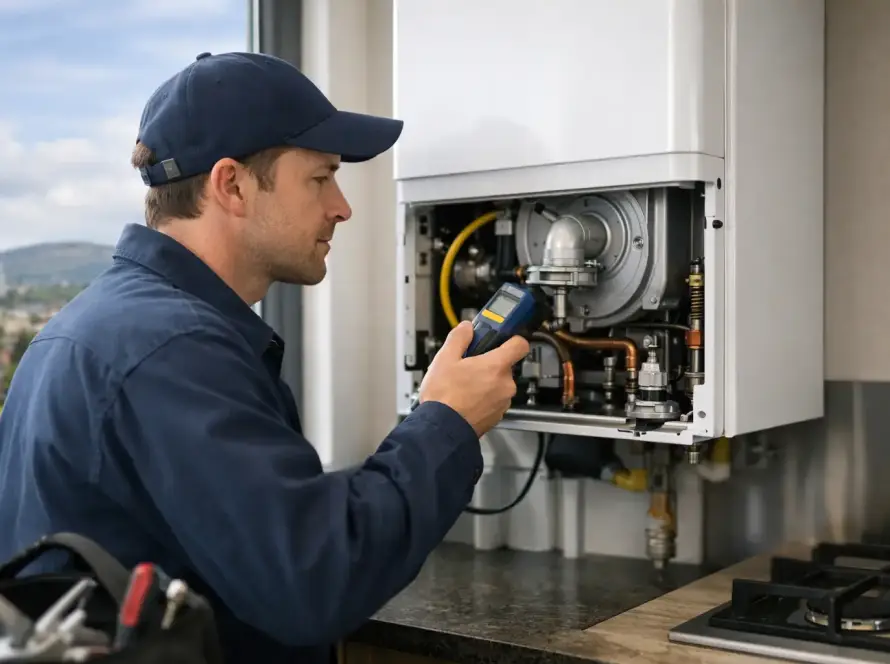


A boiler that stops working on a cold Bolton morning is rarely a minor inconvenience. Boiler faults can leave your home without heating or hot water, disrupt family routines and, in some cases, point to a safety issue that needs professional attention straight away. The good news is that some problems have a simple cause, while others can be diagnosed and repaired quickly by a qualified Gas Safe engineer.
The key is knowing what you can safely check yourself, what should never be ignored and when it is time to call for help rather than repeatedly resetting the boiler.
Boiler faults that homeowners see most often
No heating or hot water
If you have neither heating nor hot water, first check whether the boiler display is showing a fault code or warning symbol. Make a note of it rather than guessing – the code gives an engineer a useful starting point.
Then check the simple things: is there electricity to the boiler, is the programmer calling for heat, is the thermostat set above the current room temperature, and is your gas supply working elsewhere in the house? A flat smart thermostat battery, incorrect timer setting or tripped fused spur can look much more serious than it is.
If the boiler has power and is still not firing, the cause could range from low system pressure or a frozen condensate pipe to an issue with the fan, pump, ignition or gas supply. These are not repairs to attempt yourself. Modern boilers have safety controls for good reason, and bypassing or opening components can be dangerous.
Low boiler pressure
Many sealed central-heating systems run at around 1 to 1.5 bar when cold, though the correct range depends on the boiler and system. If pressure is below the recommended level, the boiler may lock out and stop providing heating or hot water.
You may be able to repressurise the system using the filling loop, but only if you are confident with the boiler instructions and there is no sign of a leak. Fill slowly and stop at the recommended pressure. Overfilling can create another fault, so do not keep adding water if the gauge is not behaving as expected.
Pressure that drops once may be the result of bleeding radiators. Pressure that drops repeatedly needs investigating. A leak, faulty pressure relief valve, expansion vessel issue or internal boiler fault could be responsible. Topping it up every few days treats the symptom, not the cause.
The boiler keeps losing pressure
A regular loss of pressure is one of the more frustrating boiler faults because the heating may work again briefly after repressurising. Look for visible water around radiators, valves, pipework and the boiler itself, but remember that leaks can be hidden beneath floors or behind walls.
You might also notice staining below the pressure relief discharge pipe outside. This can indicate that water is being released when the system heats up. An engineer can test the system properly and identify whether the issue is external pipework, a component within the boiler or a problem with the expansion vessel.
Radiators cold at the top, bottom or all over
A boiler may be working perfectly while the heating system is not distributing heat efficiently. Cold at the top of a radiator often means trapped air and may improve after careful bleeding. If several radiators are cold at the bottom, sludge or debris within the system is more likely.
Radiators that remain cold while others get hot can also be caused by stuck radiator valves, poor balancing, a weak pump or incorrect controls. It depends on the age and layout of your system. A proper diagnosis matters because simply turning the boiler temperature higher will not solve a circulation problem and may increase energy use.
Strange noises from the boiler or heating
Gurgling, banging, whistling or vibrating noises should not be dismissed as part of an ageing system. Gurgling can be related to air in the system or low pressure. Banging and kettling noises may point to restricted water flow, limescale or sludge around the heat exchanger. A humming or vibrating sound may involve the pump or fan.
The noise alone does not provide a full diagnosis, but it is helpful to note when it happens. Does it occur only when the heating starts, when hot water is running, or after the boiler has been on for a while? That detail can help an engineer trace the fault efficiently.
Frozen condensate pipe
Condensing boilers produce acidic wastewater, which drains through a condensate pipe. During freezing weather, an external section of this pipe can freeze and prevent the boiler from operating. The display may show a lockout code, and you may hear gurgling.
If the pipe is accessible and you can safely identify it, gentle warming with warm – not boiling – water may help. Never use a naked flame, boiling water or force to clear it. If it freezes repeatedly, the pipe route, insulation or sizing may need improving so the problem does not return with the next cold spell.
When a boiler fault is an emergency
Some situations need immediate action, not a routine appointment. If you smell gas, suspect carbon monoxide, see soot or scorching around the appliance, notice a yellow or lazy flame, or a carbon monoxide alarm sounds, turn the boiler off if it is safe to do so. Open windows and doors, leave the property and contact the appropriate emergency service. Do not use electrical switches, smoke or try to investigate the appliance yourself.
A major water leak from the boiler or heating system also needs a prompt response. If you can safely isolate the water supply or central-heating filling loop without touching the boiler casing, do so, then seek professional help. Water and electrical components do not mix, and a small leak can quickly cause damage.
Loss of heating in cold weather can be urgent too, particularly where there are young children, older residents or vulnerable people in the property. Protect exposed pipework where possible and arrange a qualified repair rather than relying on portable heaters as a long-term answer.
Safe checks before calling an engineer
A few checks can save time and may solve a straightforward issue. Check the boiler pressure, display code, thermostat, programmer, electrical supply and whether the condensate pipe appears frozen. If you have a prepayment meter, confirm that there is credit available.
Do not remove the boiler case, interfere with gas components or keep pressing reset repeatedly. One reset after checking the manufacturer guidance can be reasonable. Repeated lockouts are the boiler telling you that a fault still exists.
When you call, have the boiler make and model, fault code, a description of the symptoms and when they began to hand. Mention recent work such as radiator replacement, decorating near the thermostat, a power cut or a drop in water pressure. Small details often make diagnosis faster.
Why annual servicing prevents avoidable faults
Not every breakdown can be predicted, especially where an electronic component fails unexpectedly. However, an annual boiler service can identify issues such as deteriorating seals, incorrect combustion, debris, pressure concerns and worn parts before they become a no-heating call-out.
For landlords, annual gas safety responsibilities are a legal requirement. For homeowners, servicing is still one of the most sensible ways to protect a major household appliance, maintain efficiency and keep the manufacturer’s warranty valid where required. It is also an opportunity to ask whether your controls, radiator balance or system water quality are affecting comfort and running costs.
A service is not the same as a repair. If a fault is found, a good engineer should explain what has failed, what work is needed and the likely cost before proceeding. Clear advice matters, particularly where an older boiler has had several repairs and you need to weigh up another fix against replacement.
Repair or replacement: how to make the right call
There is no single age at which every boiler must be replaced. A well-maintained boiler can often be repaired economically, while a newer appliance with an expensive major component failure may need a more careful cost comparison. The decision depends on the fault, the availability of parts, the boiler’s condition, its efficiency and your plans for the property.
If breakdowns are becoming regular, hot water is unreliable or your boiler is struggling to heat the home evenly, ask for an honest assessment of both options. A replacement may provide better efficiency, improved controls and a fresh warranty, but it should be correctly sized and designed for your household rather than chosen on price alone.
For homeowners and landlords across Bolton and the surrounding area, GASCON provides practical, Gas Safe support for boiler breakdowns, servicing and longer-term heating improvements. A clear diagnosis and a properly explained repair can turn a stressful boiler fault into a manageable next step.