

A boiler rarely chooses a convenient time to fail. When the heating is off, hot water has stopped, and a replacement is needed sooner than planned, boiler finance Bolton homeowners can consider may help spread the cost of a new installation. The key is not simply finding a monthly figure that looks manageable. It is choosing the right boiler and heating work for your home, then understanding exactly what the finance agreement covers.
For households and landlords in Bolton, a clear fixed-price quotation should come before any decision about payment. That gives you a proper basis for comparing the total cost, the proposed work and the longer-term value of the installation.
When boiler finance may be a sensible option
Replacing an older, unreliable boiler can be a significant household expense, particularly if the job also needs pipework changes, radiator upgrades, a magnetic filter, new controls or repairs to bring the system up to standard. Paying in instalments may be useful when keeping savings aside for other priorities matters, or when an urgent replacement cannot reasonably wait.
It can also make sense when you are improving rather than merely replacing. For example, a boiler that keeps losing pressure, struggles to heat all radiators or leaves a growing family queuing for the shower may point to a wider system issue. Installing a boiler with the correct output, improving controls and addressing poor circulation can be better value than repeatedly paying for short-term repairs.
That said, finance is not automatically the best route for every job. If a repair will safely and reliably extend the life of your existing boiler, that may be the more economical choice. A qualified engineer should explain the condition of the appliance, the likely repair cost and the realistic alternatives without pushing you towards a replacement you do not need.
Boiler finance in Bolton starts with the right quote
A low monthly payment does not tell you whether an installation represents good value. Before looking at repayment options, ask for a written quotation that sets out the work in straightforward terms. You should be able to see which boiler is proposed, its warranty, what materials are included, whether old equipment will be removed, and whether testing and commissioning are part of the price.
The scope matters because no two replacements are exactly alike. A like-for-like combi boiler swap in an accessible kitchen cupboard is very different from moving a boiler, converting from a conventional system, fitting an unvented cylinder or correcting a poorly designed heating system. The installation may also require system cleaning, upgrades to condensate drainage, flue alterations, electrical work or new thermostatic controls.
A proper survey helps avoid unwelcome additions on installation day. It also gives the engineer a chance to ask the practical questions that affect boiler choice: how many bathrooms are in use, whether showers run at the same time, how well the property holds heat and whether there are plans for an extension or loft conversion.
Check the total amount, not just the monthly payment
Once you have a clear quote, read the finance information carefully. The amount repaid overall can be more important than the instalment shown in larger type. Check the deposit required, the repayment period, interest rate where applicable, any fees, and the total amount payable.
You should also understand what happens if a payment is missed and whether there are charges or restrictions if you want to settle early. Finance is subject to status and affordability, and an application may involve a credit check. Only proceed if the repayments remain comfortable after everyday household costs, not just in a good month.
If finance is offered for an installation, the terms should be explained before you commit. Take time to compare the figures with other ways of paying, including savings or a loan from your own bank if appropriate. The right choice depends on your circumstances, how urgently the work is needed and the cost of each option over the full term.
Where available, GASCON Ltd can introduce eligible customers to a finance provider as a credit broker, rather than a lender. The finance provider makes the lending decision. Ask for the agreement details and read them fully before signing anything.
Questions worth asking before you apply
You do not need to know the technical language, but you do need clear answers. Ask whether the quoted price includes the whole job, whether the boiler is correctly sized for the property, and what warranty and aftercare are provided. Confirm the finance amount, term and total repayable in writing.
It is also reasonable to ask what would happen if the survey identifies extra work. A professional installer will explain whether a change is necessary for safety, performance or compliance, rather than presenting a vague additional cost after the work has begun.
Choose a boiler that suits your household
The best boiler is not always the biggest one or the one with the longest list of features. It needs to suit your hot-water demand, existing system and available space.
A combi boiler is often a good fit for smaller homes with one bathroom because it provides hot water on demand and does not need a separate cylinder. However, a busy household with two bathrooms may be better served by a system boiler and cylinder, especially where more than one shower may be used at once. Water pressure and flow rate are important too. A powerful boiler cannot compensate for a poor incoming mains supply.
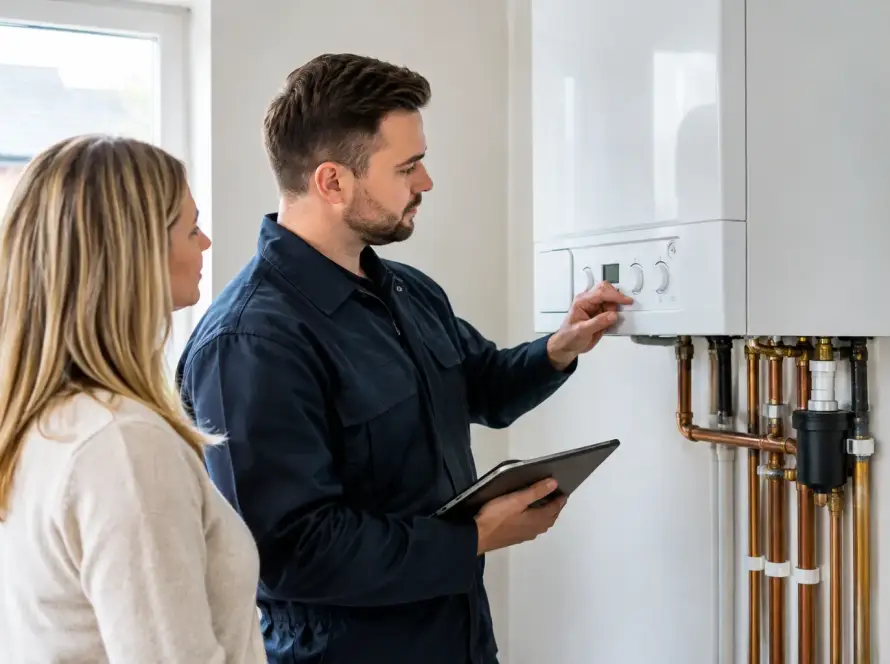
This is where local, engineer-led advice makes a difference. An experienced Gas Safe engineer can assess the whole system rather than treating the boiler as an isolated box on the wall. They may recommend improvements such as radiator balancing, replacement radiators, a filter to protect the boiler, or smart controls that give you better control of heating times and temperatures.
Do not overlook running costs and controls
A new boiler can improve efficiency, but the saving you see on bills depends on the old boiler, the condition of the heating system, insulation levels and how the home is heated day to day. Promising a precise saving without seeing the property would not be realistic.
The controls fitted alongside the boiler can have a noticeable effect. A programmable thermostat, smart control such as Hive or Nest, and thermostatic radiator valves help heat the rooms you use without overheating the rest of the house. They are not a substitute for a sound system design, but they can make everyday heating easier to manage.
Ask the installer to show you how the controls work before they leave. A well-installed boiler still needs sensible settings. Many households get better comfort simply by setting schedules around their routine, adjusting radiator valves room by room, and avoiding the habit of turning the thermostat up very high in the hope the home will heat faster.
Safety, registration and workmanship matter
Any gas boiler installation must be completed by a suitably qualified Gas Safe registered engineer. This protects your household and helps ensure the appliance is installed, tested and registered correctly. It is also worth checking that the installer will leave the area clean, explain the controls and provide the documentation you need.
Good workmanship affects reliability long after installation day. Correct pipe sizing, flue positioning, condensate arrangements, electrical connections and system water quality all play a part. Cutting corners to reach a lower headline price can lead to poor performance, repeat visits and avoidable expense later.
For landlords, there are additional responsibilities around gas safety records and keeping appliances in safe condition. A planned replacement can be far less disruptive for tenants than waiting for a boiler to fail during cold weather.
Plan for protection after installation
Finance can make the installation cost easier to manage, but a new boiler still needs annual servicing. Regular servicing helps keep the manufacturer warranty valid where required, identifies developing faults early and gives an engineer the chance to check safe operation. Keep the service record, installation paperwork and warranty details somewhere accessible.
If your existing boiler has failed and you are unsure whether to repair or replace it, begin with an honest assessment and a free quotation. The most reassuring decision is one made with clear costs, suitable equipment and a local Gas Safe engineer who will explain the work properly before it starts.