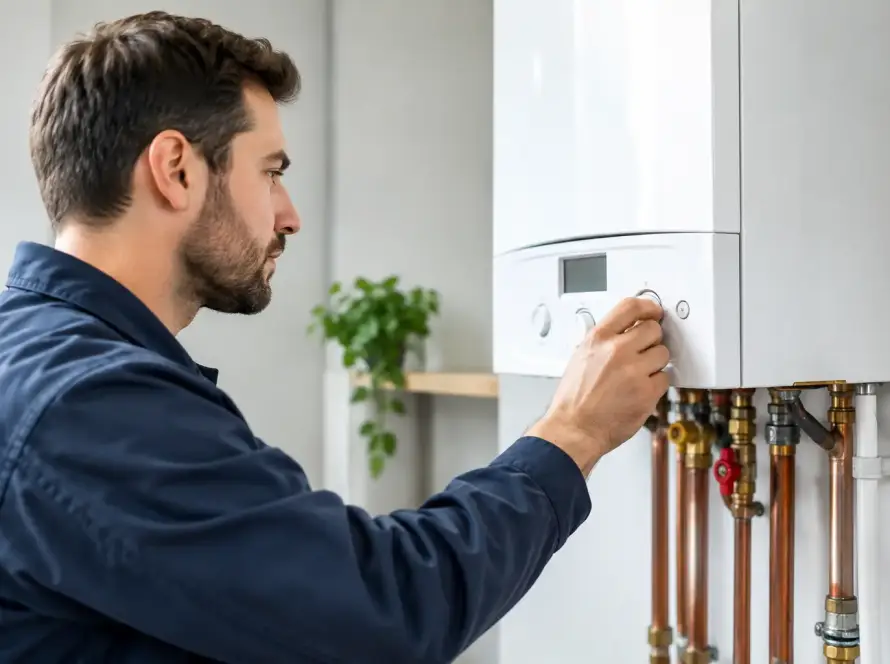


When your boiler is unreliable, noisy or costing more to run than it should, a combi boiler installation can feel like a big decision. For many homes in Bolton and Greater Manchester, it is also a practical upgrade: one compact boiler can provide heating and hot water without the need for a separate hot-water cylinder or cold-water storage tank.
The right installation is not simply a case of swapping one box for another. Your engineer should look at how your home uses hot water, the condition of the existing pipework and radiators, and where the new boiler will work safely and efficiently. That upfront care helps avoid disappointing water pressure, repeat faults and unnecessary disruption later.
Is a combi boiler right for your home?
A combi boiler heats water directly from the mains when you turn on a hot tap or shower. It is a popular choice because it saves space, provides hot water on demand and can be highly efficient when correctly sized and installed.
It is often an excellent fit for flats, smaller homes and many family houses with one bathroom. If you have good incoming mains-water pressure and do not regularly run several showers or baths at the same time, a combi can be a straightforward, economical solution.
There are trade-offs. A combi has a limit to the amount of hot water it can supply at once. In a larger property with two or more bathrooms used simultaneously, a system boiler with an unvented cylinder may be the better option. It can store a larger volume of hot water for periods of higher demand. A proper survey is the sensible way to decide, rather than choosing solely by boiler output or price.
What happens during a combi boiler installation?
Every property is different, particularly where an older conventional or system boiler is being replaced. However, a well-planned installation follows a clear sequence and should be explained in plain English before work begins.
The survey and quotation
Before fitting a new boiler, a Gas Safe engineer should assess the existing heating system and discuss what you need from it. That includes the number of radiators, bathrooms, occupants, shower type, current boiler location and any plans for an extension or loft conversion.
The survey also checks practical details such as the flue route, gas supply, condensate pipework, electrical connection and access for servicing. If the boiler is moving from a kitchen to a utility room, garage or airing cupboard, the work may involve new pipe runs, a revised flue position and additional making-good.
A clear fixed-price quotation should set out what is included. Ask whether it covers the boiler, controls, filter, system clean, pipework alterations, old boiler removal, commissioning and registration. This makes it easier to compare quotations fairly and avoids surprises once work has started.
Preparing and protecting your home
A professional engineer will protect the work area, talk you through any water or heating downtime and keep disruption to a minimum. There may be some noise while pipework is altered or the flue opening is prepared, but clean workmanship and good communication make a noticeable difference.
The old boiler is isolated and removed safely. If your home has a hot-water cylinder and loft tanks that are no longer needed, these can usually be removed as part of a conversion to a combi system, subject to access and the agreed scope of work.
Fitting the boiler and improving the system
The new boiler is installed with the correct flue, gas connection, heating pipework, pressure-relief arrangements and condensate drainage. Modern condensing boilers produce acidic condensate, so the drainage route needs careful planning, especially where external pipework is unavoidable.
A magnetic filter is commonly fitted to help protect the boiler from sludge and debris circulating in older heating systems. Depending on the condition of the system, the engineer may recommend a chemical clean or powerflush before commissioning. This is not an automatic extra for every home, but it can be worthwhile where radiators have cold spots, dirty system water or a history of recurring faults.
Controls matter too. A programmable thermostat, smart control such as Hive or Nest, and thermostatic radiator valves allow you to heat rooms more accurately. Better control can improve comfort and reduce wasted energy, but only if the system is set up around the way your household actually lives.
Testing, commissioning and handover
The final stage is where installation quality is proven. The engineer tests gas tightness, checks combustion readings, fills and vents the heating system, confirms correct operation and makes sure the hot-water flow is suitable. Your boiler should then be registered with the manufacturer for its warranty, and the relevant building-regulations notification should be completed.
You should also receive the commissioning paperwork and a simple explanation of the controls, pressure gauge and what to do if a fault code appears. Do not be embarrassed to ask questions at this point. Knowing how to adjust your heating schedule and repressurise the system where appropriate can save a great deal of frustration.
How long does installation take?
A straightforward like-for-like replacement can often be completed in one day. Replacing a conventional boiler with a combi boiler, moving the boiler, removing tanks and cylinders, or upgrading old pipework may take two to three days or longer.
Timescales depend on the property, access, the complexity of the flue route and the condition of the heating system. A reliable engineer will give you a realistic estimate before work starts rather than promising an artificially quick turnaround.
You will normally be without heating and hot water while the work is underway. If your existing boiler has failed completely, an emergency response may be needed first, followed by a planned replacement once the right boiler and materials are available.
Choosing the right boiler size
Boiler size is usually described in kilowatts, but bigger is not always better. For heating, the property’s heat loss and radiator demand are key. For hot water, the boiler’s flow rate is often the more useful figure.
A typical three-bedroom home with one bathroom may suit a boiler in the mid-20kW range, but that is only a broad starting point. A larger family home, a powerful shower, long pipe runs or higher hot-water demand could point towards a different model. Oversizing can add cost without improving your day-to-day experience, while undersizing can leave showers weak when someone opens another tap.
Your engineer should also check the gas pipe is adequately sized for the new appliance. This is a safety and performance issue, not an optional upgrade.
Why Gas Safe installation matters
Gas work must be completed by a suitably qualified Gas Safe registered engineer. That includes fitting the boiler, connecting gas pipework, checking the flue and carrying out the required safety tests.
Choosing on price alone can be costly if poor installation leads to leaks, unreliable heating, invalid warranty cover or unsafe flueing. Look for an engineer who takes time to survey the property, provides a clear quotation and is available to answer questions after the work is complete.
At GASCON Ltd, our local engineers bring more than 20 years of practical experience to boiler replacements across Bolton and surrounding areas. We explain the options clearly, fit systems carefully and leave customers knowing how their new heating works.
Getting the most from your new boiler
A new combi boiler performs best when the wider heating system is looked after. Annual servicing helps maintain safe, efficient operation and protects manufacturer warranty requirements. Keeping an eye on boiler pressure, using your controls properly and dealing with radiator cold spots early can all help prevent avoidable call-outs.
If you are considering a replacement, start with a proper home survey rather than a guess based on your old boiler. The best result is a boiler that suits your household, is installed safely and gives you dependable heating and hot water when you need it most.