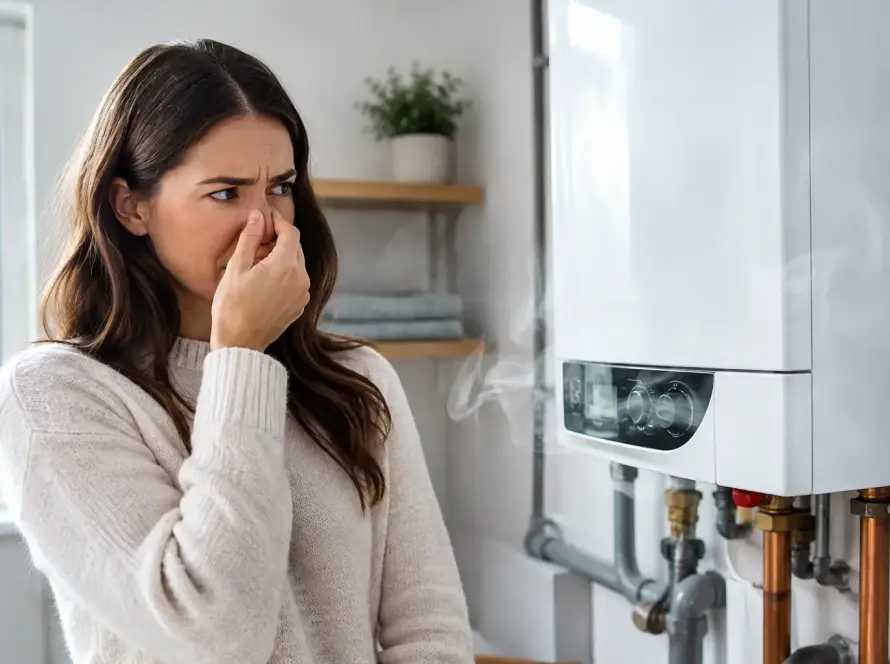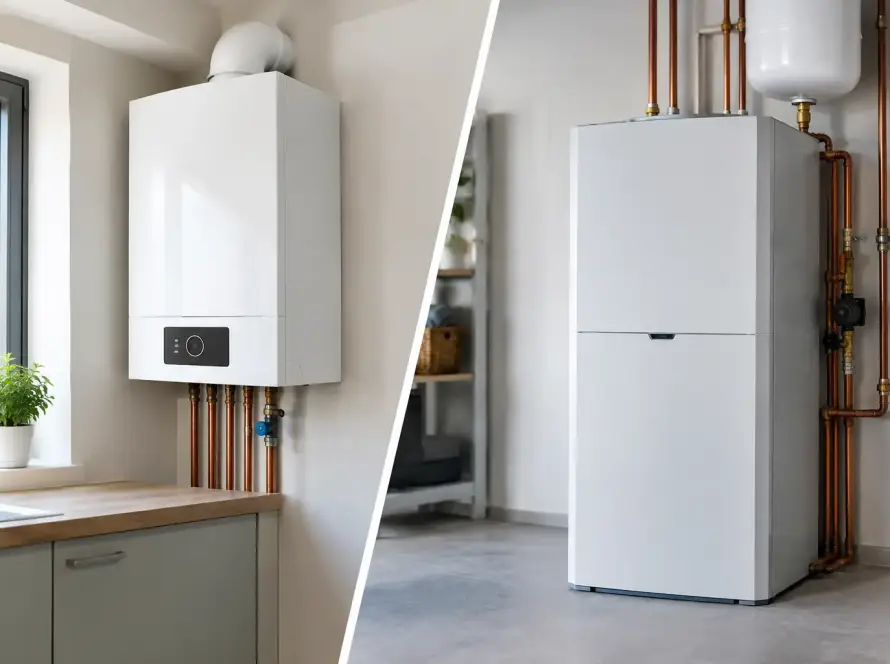


A boiler that suddenly starts whistling, banging or humming can make the whole house feel less reassuring. Some sounds are harmless changes in pipework as it warms up, but the common causes of boiler noise can also point to pressure problems, trapped air, limescale or a component that needs attention. Knowing the difference helps you act early, before a small heating fault becomes a no-heating emergency.
Common causes of boiler noise
The sound itself is a useful clue. Try to notice when it happens: only when the heating starts, while hot water is running, continuously, or just after the boiler switches off. Also pay attention to whether radiators are heating evenly and whether the boiler pressure is staying within its normal range.
Kettling: a whistling or rumbling sound
Kettling is one of the most recognisable boiler noises. It can sound like a kettle coming to the boil, with whistling, rumbling or a low roaring noise from inside the boiler. This happens when water cannot circulate through the heat exchanger as freely as it should, allowing it to overheat in one area and create steam bubbles.
On older systems, sludge and debris are common causes. In hard-water areas, limescale can also build up inside the heat exchanger. A faulty pump, a partially closed valve or poor system flow may create similar symptoms. The boiler may still run for a while, but kettling should not be ignored. It puts extra strain on the heat exchanger and can lead to repeated lockouts or more costly repairs.
The right repair depends on the condition of the system. It may involve cleaning the system, checking the pump and controls, or replacing a damaged part. Simply turning the boiler off and back on may stop the noise temporarily, but it does not remove the restriction causing it.
Banging, knocking and clunking pipes
A single knock as the heating warms up or cools down is often caused by pipework expanding and moving against floorboards, joists or clips. This can be irritating, particularly in bedrooms, but it is not always a boiler fault. Pipes need a little room to expand, and poorly supported pipework can make the movement much louder.
Repeated banging is different. It can be caused by trapped air, poor water flow, a faulty pump or pipes that have not been secured correctly. If the noise occurs when a tap is shut quickly, it may be water hammer. This is a pressure surge in the pipework, often more noticeable on plumbing lines than the heating circuit.
A qualified engineer can trace where the sound is coming from and decide whether the issue is within the boiler, the heating system or the household plumbing. That matters, because replacing a boiler part will not solve a pipework issue under the floor.
Gurgling from the boiler or radiators
Gurgling usually means air is moving through the heating system. You may also find that a radiator is cold at the top, takes longer to warm up, or has cool patches. Air can enter through a small leak, following a pressure drop, or after work has been carried out on the system.
Bleeding a radiator can release trapped air, but take care not to overdo it. After bleeding, check the boiler pressure while the system is cool and top it up only if your manufacturer’s instructions say it is safe to do so. If gurgling returns regularly, pressure keeps dropping or water appears around a radiator valve, there may be a leak or an issue with the expansion vessel that needs investigating.
Humming, vibrating or droning
A quiet hum while a boiler is operating is normal. A loud hum, vibration or droning noise is not something to dismiss, especially if it has developed gradually. The circulating pump may be working too hard, set incorrectly or beginning to fail. Fans, motors and loose internal components can also create vibrations.
If the noise is coming from the boiler casing, do not remove the cover to investigate. Boiler cases form part of the appliance’s safety system and should only be opened by a Gas Safe registered engineer. An engineer can check the fan, pump, burner and heat exchanger properly, then explain whether a repair is sensible or whether the appliance is reaching the point where replacement is better value.
Tapping or clicking noises
Clicking can be normal when a boiler attempts to ignite. Modern boilers also use electrical controls, relays and valves that may make occasional clicking sounds during operation. However, repeated clicking without the boiler firing, or clicking followed by a fault code, may suggest an ignition, fan, sensor or control problem.
Do not keep resetting a boiler that repeatedly fails to start. One reset may be appropriate if the manufacturer’s instructions allow it, but repeated resets can mask an ongoing fault. Make a note of any error code shown on the display and arrange an inspection.
Why boiler noises should not be ignored
Not every sound means your boiler is unsafe, and there is no need to panic over an occasional pipe creak. But changes in noise are often the first warning that circulation, pressure or a mechanical component is not working as it should. Dealing with the cause early can protect the boiler, improve radiator performance and reduce the risk of a breakdown when you most need heating and hot water.
Noise combined with other symptoms needs quicker attention. These include poor heating performance, a boiler losing pressure, water leaking from the boiler or pipework, frequent fault codes, unusual smells, or a yellow or lazy boiler flame where the flame is visible. If you smell gas, suspect carbon monoxide, or your carbon monoxide alarm sounds, turn off the appliance if safe to do so, open doors and windows, leave the property and contact the relevant emergency service. Do not use electrical switches, naked flames or attempt a repair.
What you can safely check before calling an engineer
There are a few useful observations homeowners and landlords can make without touching the boiler internals. Check whether the pressure gauge is within the normal operating range shown in the boiler manual. Look for obvious drips around radiator valves, pipe joints and beneath the boiler. Notice whether the noise happens during heating, hot-water use or both.
You can also check whether several radiators are cold at the top or bottom. Cold tops often indicate air, while cold bottoms can indicate sludge. These are clues rather than a diagnosis, but they give an engineer a useful starting point and can speed up the visit.
Avoid removing the boiler case, interfering with gas connections or adding chemicals to the system without professional advice. A boiler is not just a household appliance: it is a gas appliance, electrical control system and pressurised heating system in one unit.
Preventing recurring boiler and heating noises
Annual servicing is the best first line of defence. A proper service checks the boiler’s safe operation and can identify wear, combustion issues and performance concerns before they become disruptive. It is particularly worthwhile ahead of winter, when boilers are working harder and emergency appointments are more likely to be needed.
For the wider heating system, clean water and correct circulation matter. Systems with sludge, recurring air problems or uneven radiator heat may benefit from a professional assessment, cleaning and treatment with an appropriate inhibitor. Magnetic filters can help capture circulating debris, but they need checking and cleaning as part of ongoing maintenance.
If your boiler is older, noisy and regularly requiring repairs, the decision is not always simply repair versus replace. A sound boiler with a single replaceable part may be well worth repairing. But where there are repeated faults, poor efficiency and deteriorating system condition, a new boiler and properly designed heating improvements may offer better long-term reliability.
A noisy boiler rarely fixes itself. If you are in Bolton or the surrounding area and the sound is getting louder, recurring or affecting your heating, a Gas Safe engineer can identify the cause and give clear advice on the safest next step. GASCON Ltd provides fast, expert help for boiler faults, heating repairs and planned maintenance, with a practical approach that keeps you informed from first diagnosis to completed work.