

A burst pipe at 11pm, no heating on a freezing Bolton morning or water running through a ceiling can turn a normal evening into a stressful one very quickly. When you need an emergency plumber Bolton homeowners can trust, the priority is simple: make the property safe, limit further damage and get the right qualified engineer involved without delay.
Not every plumbing fault needs an immediate call-out, but waiting on the wrong one can mean damaged floors, ruined ceilings, a failed boiler or a serious gas safety risk. Knowing the difference helps you act calmly and gives your engineer the clearest possible picture when you call.
When to call an emergency plumber in Bolton
An emergency is usually a fault that is causing active damage, creates a safety concern or leaves the household without an essential service. A small drip beneath a basin can often wait for a planned repair. Water pouring from a pipe, a toilet that is overflowing or a complete loss of heating and hot water in cold weather cannot always wait.
Call for urgent help if you have a burst or badly leaking pipe, water coming through a ceiling, an overflowing toilet that will not stop, a major leak from a cylinder, radiator or boiler, or a blocked drain causing wastewater to back up inside the home. Landlords should also act quickly where a tenant has lost heating, hot water or access to a usable toilet.
Boiler faults need a little more judgement. A boiler showing an error code but still providing safe heating may be suitable for the next available appointment. A boiler that is leaking, repeatedly losing pressure, making alarming noises, or leaving a vulnerable household without heat or hot water needs prompt professional attention. Do not remove the boiler case or attempt to repair internal components yourself.
Treat suspected gas leaks differently
If you can smell gas, hear a hissing sound near a gas pipe or meter, or a carbon monoxide alarm sounds, do not treat it as a standard plumbing job. Turn off the gas supply at the emergency control valve only if it is safe to do so, open doors and windows, avoid flames and electrical switches, and leave the property.
Call the National Gas Emergency Service on 0800 111 999 from outside. If anyone feels unwell, particularly dizzy, sick, breathless or unusually tired, seek urgent medical help. A Gas Safe registered engineer should inspect gas appliances and pipework before they are used again.
What to do before your emergency plumber arrives
A few sensible actions can reduce damage and make a repair quicker. First, find and turn off the internal stop tap if water is escaping. It is commonly under the kitchen sink, but older Bolton properties can vary. Turn it clockwise, then open the cold taps to release remaining water from the pipework.
If the leak is linked to a washing machine, dishwasher or toilet, isolate that appliance or fixture using its local valve where possible. Place towels, buckets or a washing-up bowl beneath a controlled leak, but do not put yourself at risk by climbing near a wet ceiling or handling electrical items in standing water.
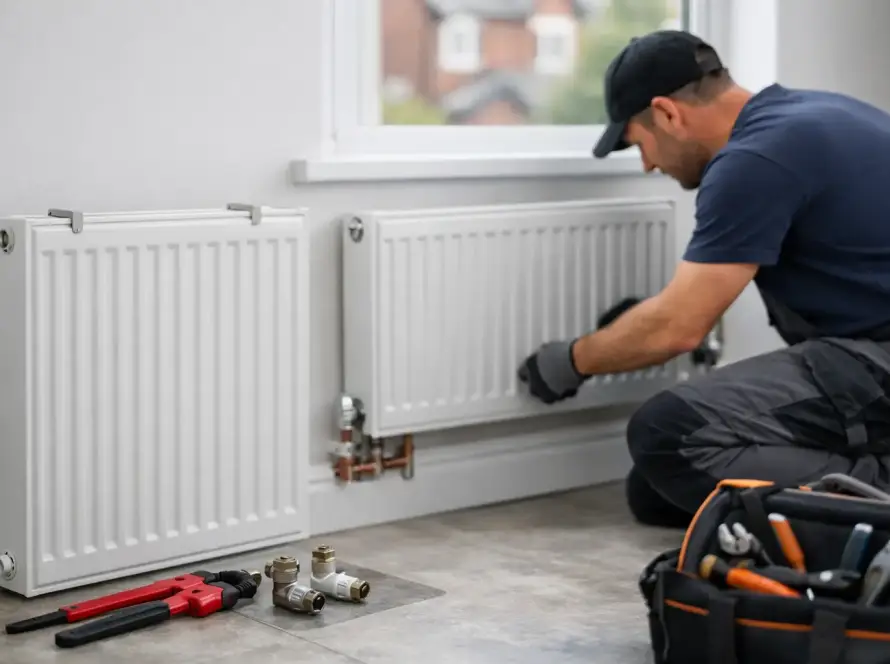
For a leaking radiator, turn both radiator valves clockwise if you can do so safely. This may slow or stop the flow until an engineer arrives. If the radiator has caused a larger system leak or the boiler pressure is falling rapidly, switch the heating off and explain exactly what has happened when you call.
Where water is close to sockets, lighting circuits or appliances, switch off electricity at the consumer unit only if it is dry and safe to reach. If there is any doubt, stay clear and contact an emergency electrician as well. Water and electrics are never a DIY combination.
It is useful to take a few photos of the fault and any visible damage, particularly if you are a landlord or intend to make an insurance claim. Then make a note of the boiler make, model and any error code displayed. These small details can help an engineer arrive prepared with the likely parts and tools.
Common emergencies and what they can mean
A sudden boiler pressure drop often points to a leak somewhere in the heating system, although it can also be caused by a faulty pressure relief valve, expansion vessel or filling loop issue. Topping up the pressure once may restore heating temporarily, but needing to do it repeatedly is not normal. Continued repressurising can make water damage worse and may mask the actual fault.
Brown or discoloured water from a tap can be unsettling, but it is not always an emergency. Work in the local water network or disturbance in older pipework can affect the appearance briefly. However, if discolouration is accompanied by low pressure, a leak, an unusual smell or flooding around external pipework, it is worth seeking urgent advice.
A blocked toilet becomes an emergency when it is overflowing, backing up sewage or is the only toilet in the home. Avoid repeated flushing, as this often makes the situation worse. A simple blockage may be resolved quickly, but recurring blockages may need investigation rather than another temporary clearance.
Leaks from unvented hot-water cylinders deserve particular care. These systems operate under pressure and should only be worked on by an appropriately qualified engineer. Never cap off discharge pipework, interfere with safety valves or try to alter the controls. The safety components are there for a reason.
Choosing an emergency plumber Bolton residents can rely on
In an urgent situation, it is tempting to choose the first person who answers the phone. Availability matters, but so do qualifications, clear communication and an honest approach to the work required.
For any job involving a boiler, gas appliance or gas pipework, always ask whether the engineer is Gas Safe registered and qualified for that type of work. Gas safety is not an area for guesswork. A properly qualified local engineer can diagnose whether the issue is plumbing, heating, electrical control wiring or the appliance itself, saving time and unnecessary repeat visits.
Ask how the call-out and repair costs are handled before work begins. Some faults can be diagnosed and repaired during the first visit; others need a part, a return visit or further testing. A good engineer will explain what has been found, what needs doing now and what, if anything, can safely wait. Fixed-price quotations are especially valuable for planned follow-on work, because you know where you stand before committing.
Local experience also counts. Bolton homes range from traditional terraces with older pipework to newer properties with combi boilers, system boilers, unvented cylinders and smart controls. An engineer who works across these systems daily is more likely to identify the cause rather than simply treat the symptom.
GASCON Ltd provides 24/7/365 emergency support alongside planned plumbing, boiler and heating work, bringing more than 20 years of practical experience to urgent faults and longer-term repairs alike.
When an urgent repair becomes a longer-term decision
An emergency repair should get your home safe and functioning again. It does not always mean the most cost-effective answer is another repair next month. If a boiler is older, frequently breaking down, losing efficiency or requiring increasingly expensive parts, a replacement may be worth considering once the immediate problem is resolved.
The same applies to recurring radiator leaks, poorly balanced heating and ageing controls. Replacing one faulty radiator may be the right answer. In other homes, upgrading radiators, improving system cleaning, fitting a smart thermostat or reviewing the boiler size can make heating more dependable and reduce wasted energy. The right option depends on the age and condition of the system, the property layout and your budget.
For landlords, keeping a record of boiler servicing, repairs and safety checks also makes recurring problems easier to spot. For homeowners, regular annual servicing is the best chance to catch worn components, pressure issues and combustion concerns before they become an out-of-hours problem.
A clear call is the fastest route to a solution
When you call, explain whether water is actively escaping, whether the gas supply is involved, whether heating and hot water are working, and whether anyone vulnerable is in the property. Have the boiler error code ready if there is one. This allows the engineer to prioritise the risk and give practical instructions while they arrange attendance.
Plumbing emergencies are disruptive, but they do not need to become chaotic. Turn off what you safely can, avoid risky DIY repairs and choose a qualified local professional who will explain the problem in plain English. A calm first response can protect your home, your heating system and your peace of mind.