

A warm home should not mean constantly turning the thermostat up or watching your gas bill climb. Energy efficient heating is about getting the heat you pay for into the rooms that need it, at the right time, without asking an ageing boiler or poorly balanced system to work harder than it should.
For homeowners and landlords in Bolton and across Greater Manchester, the best improvement is rarely one dramatic change. A well-serviced boiler, properly sized radiators and controls that suit the household can make a noticeable difference together. The right approach depends on the age and condition of your system, how your home is used and whether you are planning a small repair or a larger upgrade.
Start with the heating system you already have
Before replacing a boiler, look at how the current system is performing. If rooms heat unevenly, radiators have cold patches, the boiler regularly loses pressure or hot water takes too long to arrive, there may be a system fault or circulation issue behind the wasted energy.
A heating engineer can assess the boiler, pump, controls, radiators and pipework rather than treating each symptom in isolation. Sometimes a radiator repair, correct balancing or a control adjustment brings the system back to life. In other homes, repeated breakdowns and rising repair costs point towards replacement being the more sensible long-term choice.
Annual boiler servicing matters here. It helps keep a gas boiler operating safely and gives an engineer the chance to spot developing faults, such as poor combustion, worn parts or a blocked condensate route, before they lead to a no-heating emergency. Servicing does not turn an old boiler into a new one, but it can help it run as efficiently and reliably as its condition allows.
Energy efficient heating begins with the boiler
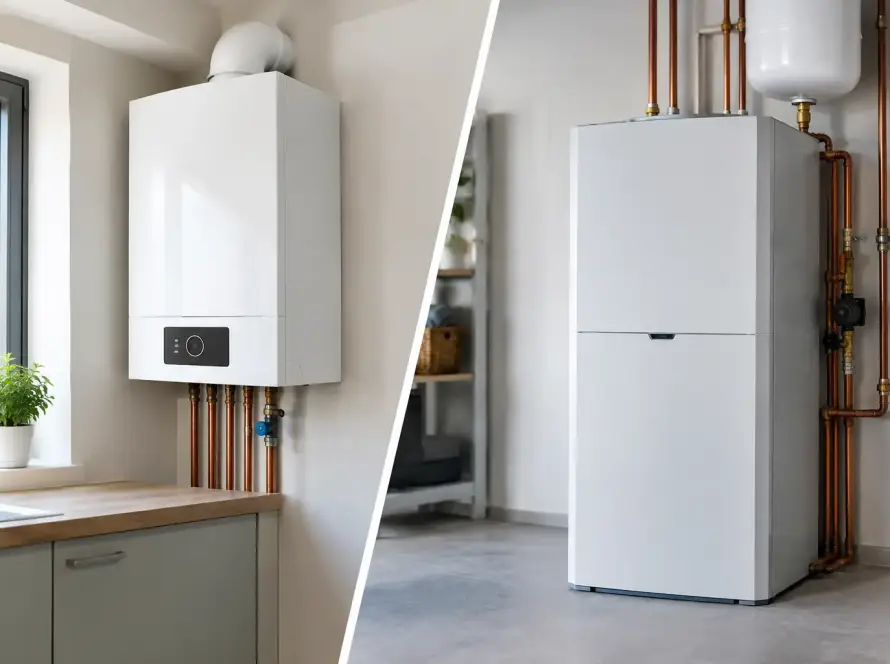
Modern condensing boilers recover heat that older boiler designs would send out through the flue. That is why replacing a very old, inefficient or unreliable boiler can reduce fuel use as well as improve day-to-day comfort.
However, a new boiler is not automatically the right answer for every household. A boiler that is only a few years old but performing poorly may need a repair, a service or better controls. Equally, fitting an oversized boiler will not make a home warmer more efficiently. Correct system design and boiler sizing are essential, particularly when extending a property, converting a loft or adding an extra bathroom.
For a replacement, consider more than the boiler itself. The existing pipework, radiator output, hot-water demand and the condition of the system water all affect the result. A professional installation should be planned around the home, not selected from a one-size-fits-all recommendation.
Keep flow temperatures in mind
A condensing boiler is most efficient when it can run at a lower flow temperature while still heating the home properly. This allows it to condense more effectively and recover more heat from the flue gases.
Lowering the temperature too far without checking radiator capacity can leave rooms slow to warm up. Larger or upgraded radiators may be needed in some properties, especially those with smaller older radiators or heat loss through poor insulation. This is where an engineer can make a practical recommendation rather than relying on a setting copied from the internet.
Make controls work around your household
Heating controls are often the most affordable route to better efficiency. A programmer lets you heat the home when people are actually there, while a room thermostat prevents the boiler running once the chosen temperature has been reached.
Smart controls such as Hive or Nest can make this easier to manage from your mobile phone and can help households see patterns in how they use energy. They are useful when work schedules change, when a property is empty during the day or when you want to avoid heating the house for longer than necessary.
Smart controls are not magic, though. Their value comes from sensible settings. Heating an empty home to a high temperature, repeatedly boosting the system or setting every room warmer than needed will still cost money. For most homes, steady scheduling and modest temperature adjustments are more effective than constantly switching the heating on and off.
Thermostatic radiator valves, often called TRVs, add another layer of control. They allow cooler settings in bedrooms, spare rooms and less-used spaces while keeping living areas comfortable. They should not normally be used to control the room where the main thermostat is located, as the two controls can work against each other.
Do not overlook radiators and system water
Radiators are where the heat is delivered, so poor radiator performance can make an otherwise decent boiler seem inefficient. A radiator that is cold at the top may need bleeding. One that is cold at the bottom may have sludge restricting circulation. A radiator that stays cool while the rest of the house heats up could have a stuck valve, an airlock or a balancing issue.
When several radiators are slow, noisy or uneven, the wider central-heating system should be checked. Cleaning the system where appropriate, fitting protection for the boiler and ensuring radiators are balanced can improve circulation and help the boiler heat the property without running for excessive periods.
Replacement radiators are worth considering during a refurbishment or boiler upgrade. Modern radiators are available in sizes and outputs suited to each room. The aim is not simply to fit the biggest radiator possible, but to provide enough heat at efficient operating temperatures and position it where it can warm the room effectively.
Reduce heat loss before chasing bigger heating output
No heating system can fully compensate for heat escaping through draughts, an uninsulated loft or poorly performing windows. Simple measures such as draught-proofing doors, insulating accessible pipework and making sure loft insulation is adequate can reduce the demand placed on your boiler.
Ventilation still matters. Do not block purpose-made vents around gas appliances or make a home so sealed that moisture and condensation become a problem. The goal is controlled heat loss, not poor air quality. If you are considering major insulation work or an extension, it is a good time to review the heating design as well.
Small habits that protect comfort and costs
A few everyday changes can support an efficient system. Keep furniture clear of radiators so heat can circulate into the room. Close curtains at dusk in colder weather, but do not cover radiators with long, heavy curtains. Use your programmer rather than relying on repeated manual boosts, and give a changed temperature setting time to work before turning it higher again.
If you are away for a winter holiday, use frost protection or a low background setting where appropriate rather than turning the heating completely off for an extended period. This can help protect pipework in cold weather, especially in older properties.
For landlords, regular servicing and prompt attention to tenant reports are particularly valuable. A small pressure loss or lukewarm radiator can become a bigger failure if left through the heating season. Clear records and planned maintenance also help avoid the disruption of emergency repairs.
When to call a qualified heating engineer
Book professional help if your boiler is displaying fault codes, losing pressure repeatedly, making unusual noises, producing unreliable hot water or leaving parts of the home cold. If you smell gas, suspect a gas leak or have a carbon monoxide alarm sounding, treat it as urgent, leave the property if necessary and seek emergency assistance.
Gas work must be carried out by a Gas Safe registered engineer. A proper assessment can separate a straightforward adjustment from a fault that needs repair, and can give you a clear, fixed-price quotation where larger work is required. GASCON Ltd can assess boilers, radiators, smart controls and central-heating performance for homeowners and landlords who want practical, local advice.
The most useful next step is to notice how your home heats over the next few days: which rooms lag behind, how often the boiler runs and whether your controls match your routine. Those details give a heating engineer a far better starting point and can lead to improvements that make your home warmer without wasting fuel.