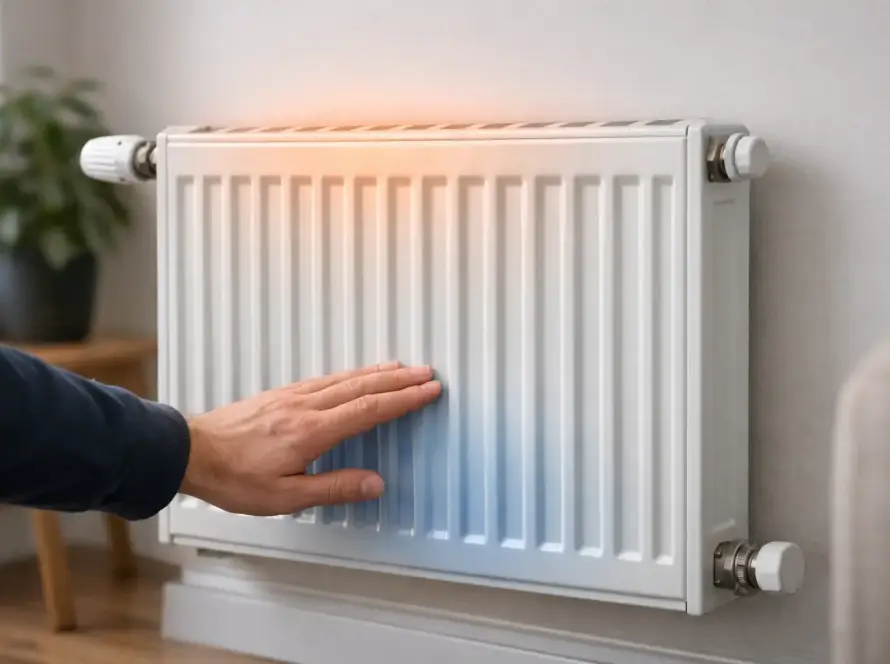


A boiler that suddenly locks out on a frosty morning is often not a major breakdown. Before assuming the worst, knowing how to thaw condensate pipe safely could get your heating and hot water running again. The key is to deal with the frozen section gently, without taking risks with boiling water, electrics or the boiler itself.
Most modern condensing boilers produce a small amount of acidic water called condensate as they run. This normally drains away through a plastic pipe. When part of that pipe is outside, in an unheated garage or close to an external wall, it can freeze during cold weather. The blockage stops the condensate draining, and the boiler shuts down as a safety measure.
Signs Your Condensate Pipe Has Frozen
A frozen condensate pipe is most likely when the temperature has dropped below freezing, especially overnight. Your boiler may display a fault code, make a gurgling sound, or switch itself off. There may also be no heating or hot water even though the gas and electricity supply are working normally.
Look for a white, grey or black plastic pipe leaving the boiler and heading outdoors. It is usually around 22mm in diameter, although some systems have a larger pipe. A visible build-up of frost, ice or water around the pipe or its end is a strong clue that it has frozen.
Not every boiler fault in winter is caused by condensate. Low system pressure, a frozen mains water pipe, ignition problems and faults within the boiler can cause similar symptoms. If you are unsure, check the manufacturer’s instructions or arrange for a qualified engineer to assess it rather than repeatedly resetting the boiler.
How to Thaw a Condensate Pipe Safely
First, turn the boiler off at its controls. Do not remove the boiler casing, undo pipework or interfere with any electrical connections. You only need to thaw the accessible outside section of plastic pipe.
Use warm water, not boiling water. Fill a jug, watering can or bottle with warm tap water and pour it slowly over the frozen part of the pipe. Start nearest to the boiler and work towards the open end, allowing the water time to melt the ice inside. If the pipe is awkward to reach, a hot water bottle or a warm, damp cloth held around the pipe can work well.
Boiling water can crack cold plastic pipework, which may turn a straightforward winter issue into a leak. Do not use a blowtorch, heat gun, naked flame or any electrical appliance outdoors near water. Never climb on ladders, lean from an upstairs window or walk on icy ground to reach pipework. A call-out is the sensible option if access is unsafe.
As the ice clears, you may hear water running through the pipe or see a small flow from its end. Once the pipe has thawed, turn the boiler back on. You may need to press the reset button once, following the instructions shown on your boiler or in its manual. Give it a few minutes to complete its start-up process.
If it fires up and stays running, check that the pipe continues to drain. If the fault code returns, do not keep resetting it. The blockage may remain further along the run, or the boiler may have a separate fault that needs professional attention.
Do Not Pour Water Into the Boiler
The condensate pipe connects to the boiler, but the boiler is not the place to thaw it. Do not pour water into any opening on the appliance or attempt to disconnect the pipe indoors. Condensate systems are part of the boiler installation, and a poor reconnection can lead to leaks, damaged components or recurring shutdowns.
If you can see a blockage in an external pipe, warming the outside only is usually enough. Where the pipe runs behind boxing, underground or through a difficult-to-access area, leave the investigation to an experienced heating engineer.
What to Do If the Boiler Will Not Restart
Check the basics once the pipe has thawed. Make sure the boiler has power, the thermostat is calling for heat and the pressure gauge is within the range recommended by the manufacturer. Many systems sit at around 1 to 1.5 bar when cold, but the correct level varies by boiler.
Then try one controlled reset. Repeated resetting will not clear a fault and can make it harder to identify what has gone wrong. If there is a gas smell, leave the property, avoid switches and naked flames, and contact the gas emergency service immediately from a safe location.
For no heating or hot water with no gas smell, a local Gas Safe engineer can diagnose whether the problem is a remaining condensate blockage, a pressure issue or a boiler fault. GASCON provides fast, expert help for homeowners and landlords across Bolton and the surrounding area, including urgent heating problems in cold weather.
Preventing Your Condensate Pipe From Freezing Again
Thawing the pipe gets you going, but a repeat freeze is frustrating and usually preventable. The best long-term answer depends on where the pipe runs, its size and whether there is a suitable internal drainage route.
External condensate pipework should be as short as practical and should fall continuously towards the drain so water cannot sit in a low spot. A wider external pipe is less likely to freeze than a narrow one. In many cases, engineers use 32mm pipe externally rather than a smaller size, subject to the installation and current guidance.
Insulation also helps, particularly on exposed runs. It must be weather-resistant, fitted properly and checked over time, as damaged or missing insulation gives cold air an easy route to the pipe. Insulation reduces the chance of freezing but cannot always overcome a long, badly routed external run during severe weather.
Where possible, rerouting the condensate internally is often the most reliable solution. That may not be practical in every home, particularly where the boiler is located on an outside wall with no nearby internal waste connection. A good engineer will explain the options, the likely disruption and the cost before recommending alterations.
Keep the pipe outlet clear as well. Leaves, soil and debris around an external drain can slow the flow of condensate and allow it to back up. During a cold spell, check the accessible pipework before the boiler stops, particularly if it has frozen in previous winters.
A Quick Winter Check for Landlords and Homeowners
If your boiler is in a garage, utility room or kitchen on an external wall, identify the condensate pipe before winter sets in. Take a photo of the outside route, so you know what you are looking for if the boiler displays a fault on a cold morning. Keep the boiler manual somewhere easy to find and know how to reset the appliance correctly.
For landlords, it is worth giving tenants simple guidance on what a frozen condensate pipe looks like and when to call for help. Clear instructions can prevent unnecessary downtime, but tenants should never be expected to take risks to reach pipework or attempt repairs to the boiler.
Annual boiler servicing is also a useful opportunity to ask whether the condensate route is suitable. An engineer can inspect the pipe’s fall, support, insulation and termination, then flag changes that could reduce the risk of winter lockouts.
A frozen condensate pipe is often a manageable problem, provided the pipe is accessible and it can be warmed safely. If the boiler does not recover, the route is difficult to reach or the same issue keeps returning, getting professional advice early can save a cold house, a damaged pipe and a much bigger inconvenience.