

A boiler rarely chooses a convenient time to fail. It is usually on the first properly cold morning, before guests arrive, or when everyone needs a shower. If you are wondering when to service boiler equipment, the simple answer is every 12 months – ideally before you depend on it through autumn and winter.
That annual appointment is not just a box-ticking exercise. A proper boiler service helps a qualified engineer spot wear, combustion issues and small faults before they develop into a loss of heating or hot water. For homeowners and landlords in Bolton and Greater Manchester, it is one of the most sensible ways to protect comfort, safety and the life of the appliance.
When to service your boiler each year
Most manufacturers recommend an annual boiler service. If your boiler is still under warranty, keeping to this schedule is often a condition of that warranty. Missing a service may leave you responsible for repair costs that could otherwise have been covered, so check the terms supplied with your boiler.
For most households, late summer or early autumn is the best time to book. The heating is used less frequently, so there is less disruption if the engineer identifies a part that needs replacing. It also gives you the reassurance that your boiler has been checked before the cold weather puts it under sustained demand.
There is no rule that says a service must happen in September, though. If your last service was in January, booking the next one around the following January is better than waiting until autumn and allowing well over a year to pass. The key point is to keep the interval close to 12 months.
Winter servicing is still worthwhile if you have missed your usual date. Engineers are naturally busier when temperatures drop and breakdowns increase, but a late service is better than no service at all. Book as soon as you can, particularly if the boiler has been working harder than usual or has begun behaving differently.
Is a boiler service legally required?
For homeowners, annual servicing is strongly recommended rather than generally a legal requirement. It supports safe operation, helps preserve the manufacturer’s warranty and can reduce the likelihood of an avoidable breakdown. It is also a sensible record to have if you sell the property or need to demonstrate that the heating system has been cared for.
Landlords have a separate legal duty. Any gas appliance and associated flue in a rented property must have a Gas Safety check carried out at the required intervals by a Gas Safe registered engineer, with the correct record provided to tenants. A landlord gas safety inspection is not automatically the same as a full boiler service. In practice, arranging both together can be convenient, but ask the engineer exactly what is included.
Signs your boiler needs attention sooner
Do not wait for the annual date if you notice a change in performance. A service is planned maintenance; a developing fault may need a repair visit first. Early action can prevent a smaller issue turning into a no-heating emergency.
Look out for unusual banging, whistling or vibrating noises, frequent pressure drops, radiators that no longer heat evenly, or hot water that is unreliable. A yellow or orange flame on an older visible-flame appliance is also a warning sign – a healthy gas flame should be crisp blue. Never try to adjust gas components yourself.
Other signs include a boiler that repeatedly locks out, an unexplained increase in energy use, leaking water around the appliance, or a flashing fault code. Fault codes are useful information for the engineer, but they are not a diagnosis to ignore or reset repeatedly. Make a note of the code, when it appears and whether heating or hot water is affected.
If you smell gas, suspect a carbon monoxide leak, or your carbon monoxide alarm sounds, treat it as urgent. Turn off the gas supply only if it is safe to do so, open doors and windows, avoid switches and naked flames, leave the property, then contact the appropriate emergency gas service. Do not re-enter until it is declared safe. A routine service should never be used as a substitute for acting immediately on a gas safety concern.
Why a service can prevent winter breakdowns
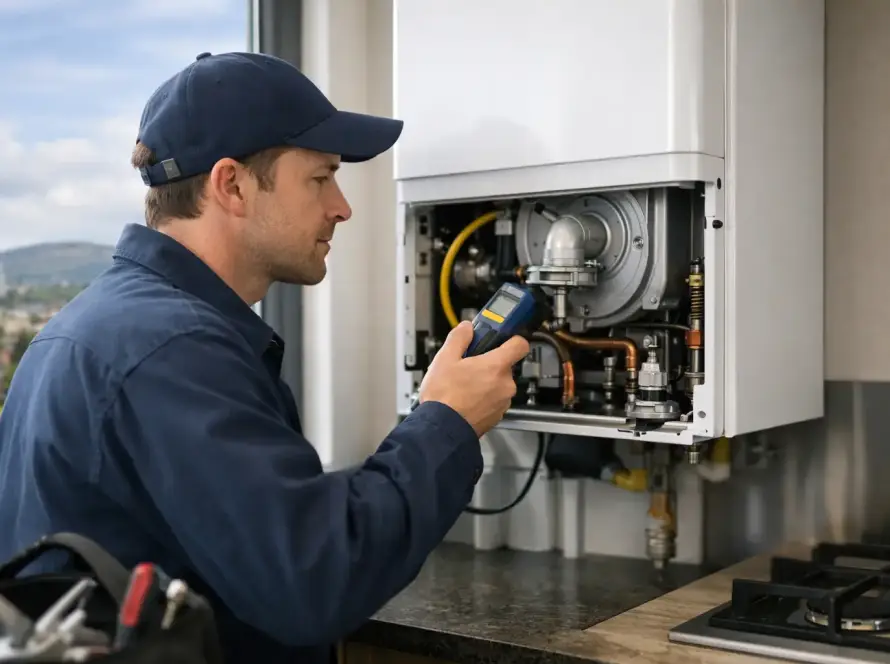
Boilers work hardest when the weather is cold. Parts that appeared to be coping during mild weather can struggle after weeks of constant use. During a service, a Gas Safe registered engineer checks the boiler’s operation, safety devices, flue and combustion performance where appropriate. They will also inspect for signs of leaks, corrosion, poor ventilation and deterioration that could affect reliable running.
The exact checks vary with the make, model, age and type of boiler. A modern condensing combi boiler, for example, has different servicing requirements from an older conventional boiler with a hot-water cylinder. The engineer should follow the manufacturer’s instructions rather than applying a one-size-fits-all checklist.
A service cannot promise that no component will ever fail. Electronics, pumps and valves can develop faults without warning. What it does provide is a regular professional assessment, an opportunity to catch problems early and a clear record of the appliance’s condition.
What happens during a proper boiler service?
A good service should be thorough but understandable. The engineer will confirm the boiler is operating safely, inspect the appliance and flue route, and check that the burner is burning correctly. They may clean relevant internal parts where required by the manufacturer and test controls, pressure and the condensate arrangement.
They should also check for signs of unsafe operation and explain any findings in plain English. If a repair is recommended, you should know what the fault is, why it matters and what the likely cost involves before work goes ahead. Clear communication matters just as much as technical knowledge when you are making decisions about your home.
Your central-heating system deserves attention too. A boiler can be in good condition while rooms remain cold because of a sticking radiator valve, trapped air, sludge, poor balancing or an ageing pump. Mention cold spots, noisy pipework and slow heat-up times during the appointment. In some cases, a radiator repair, system clean or controls upgrade will make a noticeable difference to comfort and running costs.
How to prepare for your annual service
You do not need to do any technical work before the engineer arrives. Make sure the boiler is accessible and move stored items away from the cupboard or utility area. If the boiler is boxed in, the service panel must be reachable. Let the engineer know about any faults, noises or error codes you have seen, even if they have disappeared for now.
It is also helpful to have the boiler make and model to hand, along with any previous service paperwork. If you have a magnetic filter, smart thermostat, unvented cylinder or other linked heating equipment, mention it when booking. This helps ensure enough time is allowed for the visit and that the engineer understands the wider system.
Between services, keep an eye on boiler pressure and only top it up if you have been shown how to do so for your system. Repeatedly repressurising a boiler is not a fix. It often points to a leak, expansion vessel problem or another issue that needs investigation.
Choosing the right engineer for boiler servicing
A boiler service should always be carried out by a Gas Safe registered engineer qualified for the appliance involved. Do not be shy about checking credentials. A professional engineer will expect it and should be happy to explain the work being completed.
Local experience has practical value too. An engineer who works regularly in Bolton homes will understand the mix of older properties, extensions, combi systems and traditional heating layouts found across the area. They can assess the boiler in the context of the whole system rather than simply resetting a fault and leaving.
At GASCON Ltd, planned boiler servicing is approached with the same care as an urgent repair: clear advice, safe workmanship and no unnecessary jargon. If a problem is found, you should be given a straightforward explanation and sensible options, whether that means a small repair, improving heating controls or considering replacement for a boiler that is no longer economical to maintain.
Set a reminder for 12 months from your last service, but do not ignore changes in the meantime. Booking before the colder months is a practical habit; responding quickly to warning signs is what helps keep a minor concern from becoming a cold-house call-out.